On breath, bend, and being enough.
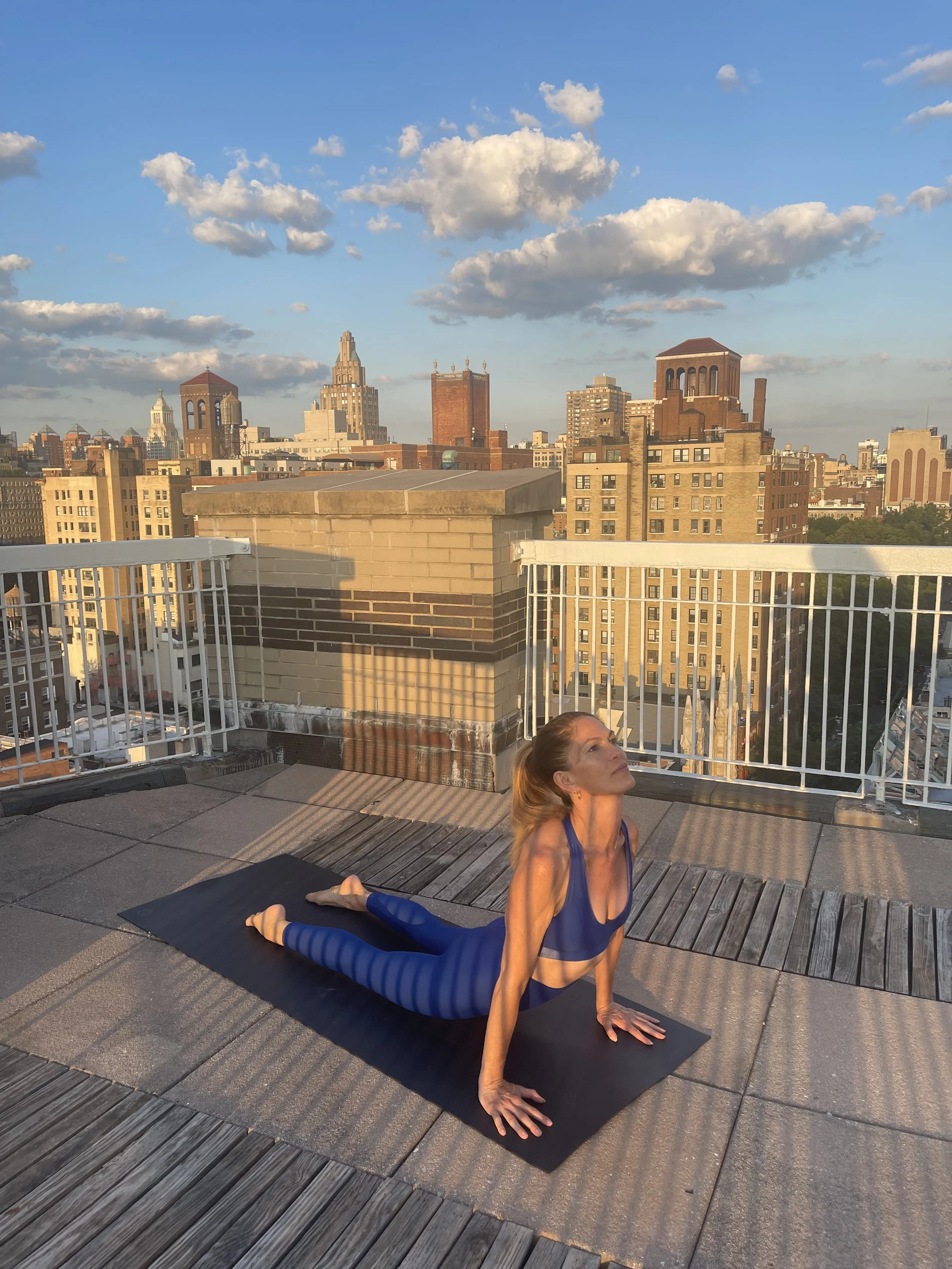
I've done close to a thousand yoga classes at my local studio.
Nine hundred and twenty, to be exact.
I'm still not "advanced." I fall out of balance poses, crow remains my nemesis, and
I'm not much closer to a handstand than I was five years ago.
But I keep showing up—because yoga, for me, isn't about the poses. It's about the practice.
Through yoga, I've learned to stay calm when things get uncomfortable and to come back to my breath when my mind is spinning. After years of sweating, breathing, twisting, and bending, I've realized yoga isn't just something I do—it's changed how I live.
Today I'm sharing what yoga has taught me about living well, one breath at a time.
Breath: Your Built-In Reset Button
When things get hard in yoga, you don't push harder—you breathe deeper.
Science backs this up: slow, intentional breathing stimulates the vagus nerve, activating your parasympathetic nervous system—the "rest and restore" response that lowers heart rate, reduces cortisol, and signals safety to your body.
We forget we carry this medicine inside us—this ability to anchor ourselves, anywhere, anytime, for free.
Yoga trains you to return to your breath—not to escape what's difficult, but to stay present with it. A valuable skill on the mat and in life.
Lion's Breath: The Power of Release
There's another breath I've learned to love—Lion's Breath. It's raw, loud, and completely uncurated.
You kneel, inhale deeply through your nose, and exhale forcefully through your mouth—tongue out, eyes rolled back, sound and all.
The first time I did it, I felt ridiculous. Years later, I feel something different: free.
Lion's Breath is about permission—to release the tension, the pressure, the things you've swallowed for the sake of being "fine."
We hold so much in our bodies—stress, grief, unsaid words, the constant tightness of keeping it all together. Lion's Breath cracks that open. It's catharsis through sound and movement—communal, primal, real.
Sometimes healing doesn't look pretty. It looks like making a weird sound in a hot room full of strangers and realizing you don't have to keep it all inside.
Sweat: The Body's Natural Detox
If you've followed me for a while, you know I believe detox is a lifestyle—not a buzzword, not a cleanse.
When we support the body's natural detox systems, we help it do what it's designed to do: clear what weighs it down so we can feel vibrant, lighter, and more energized.
Practicing yoga in a hot room has become an essential part of my detox protocol. When you sweat, you're not just cooling your body—you're helping it release metabolic waste and toxins through your skin.
It's also deeply sensory. The feeling of sweat rolling down your back as you move, breathe, and soften—it's like wringing out the old and making space for the new.
I walk out of class feeling lighter—not just physically, but emotionally. Renewed. Happy. Alive.
However you like to get sweaty, consider it a powerful addition to your health routine.
Forward Folds: Calm in the Chaos
A simple forward fold—Uttanasana—can feel like coming home.
Head down, heart above head, it lengthens your spine, massages your organs, and increases blood flow to your brain. More importantly, it soothes your nervous system, sending a clear signal to your body: you're safe.
Try this: Next time you're feeling under pressure or need a reset, bend at the waist and hang heavy. Notice if you feel calmer. No equipment needed—just your body folding in on itself in quiet surrender.
Balance: Medicine for Aging
Balance is more than nailing the perfect yoga pose—it's medicine for longevity.
As we age, maintaining balance, muscle mass, and strength becomes critical. Falls are one of the leading causes of frailty and the kind of rapid decline that steals independence in older adults.
Practicing balance on the mat—tree pose, warrior III, including the wobble—trains your stabilizing muscles, builds coordination, and keeps neural pathways firing.
Working on your balance and strengthening your ability to recover when you sway is key for optimal aging.
Bend: The Art of Staying Open
Yoga has taught me the beauty of bending—in body, and even more so in mind.
Flexibility isn't about touching your toes. It's about staying open—to discomfort, to possibility, to life not going according to plan.
Every time we bend, we practice resilience. Real strength is the willingness to stay open, to adjust, to meet life where it moves.
So yes, bend. Bend your body, your expectations, your old stories. Bend everything you can, because you can.
Consistency Over Perfection
Habit is the building block of change.
There's a concept from BJ Fogg's Tiny Habits that resonates with me: If you want to make a change, you have to embrace the power of small.
I didn't get to 920 classes through motivation alone—I got there through micro-decisions. Logging into the app. Filling my water bottle. Stepping into the room. Unrolling my mat.
Each class reinforces a promise to myself: I show up for me. Not because I feel like it, but because I'm worth showing up for.
Perfection doesn't transform you. Consistency does.
Shavasana: The Stillness After the Work
At the end of every class, you lie flat on your back and do absolutely nothing. Shavasana—the "corpse pose," lovingly nicknamed the nap pose—is the quiet finale to all that movement.
But it's not about sleep. It's about integration.
It's the easiest posture to describe and the hardest to master. Because we live in a culture addicted to motion. We move, we do, we produce. Stillness feels foreign.
But Shavasana is where everything comes together—the breath, the stretch, the focus, the effort. It's where your nervous system recalibrates and your body shifts from "doing" to healing.
You don't have to earn rest. You are allowed to stop. To let things settle.
Stillness isn't a waste of time. It's a requirement for healing.
Gratitude: The Privilege of Showing Up
As class comes to a close, I often feel a wave of gratitude—not just for my body, but for the privilege of moving it.
For the community of people breathing beside me. For the teacher's voice guiding us back to stillness. For the mat that has caught every version of me—the strong one, the tired one, the one who had a horrible week.
Every class is a reminder that showing up—however you can—is enough.
You are enough.
Not the better version you're chasing. Not the one who did it perfectly. The one who showed up anyway.
That's the real practice. On the mat. In the body. In life.If you take anything from this, let it be this: whatever your practice is—your "yoga"—it's a conversation with your body, your breath, and your limits.
Keep breathing. Keep bending. Keep showing up, even when it's imperfect and messy.
And when you can, pause long enough to notice the magic of it all—the breath, the balance, the sweat, the stillness, the body that carries you through it.
It's all a privilege. Every single bit of it.